
RFID Port Solutions
Smart Identification
Strengthening security and operational control through non-intrusive identification that supports ISPS Code objectives.
Learn MoreAutomated Identification
Non-intrusive vehicle and personnel identification without stopping.
Real-Time Tracking
Continuous visibility of vehicle and container movement across port areas.
System Integration
Seamless integration with gate automation, TOS, and surveillance systems.
RFID Solutions for Global Ports
Global ports are managing higher traffic volumes under stricter ISPS port security enforcement, making manual and visual identification increasingly inefficient.
Maritime Systems provides RFID solutions designed for port environments, enabling automated identification, RFID vehicle access control, and real-time movement visibility across port infrastructure.
RFID supports ISPS Code objectives by enabling auditable access control and tracking of vehicles, containers, and logistics movements.
Enhanced Port Operations
Beyond improving gate speed, RFID strengthens how ports govern movement, coordinate teams, and take operational decisions.
Faster Turnaround
Reduced gate congestion and faster vehicle turnaround through automated ID.
ISPS Compliance
Verifiable movement records supporting ISPS audits and security investigations.
Stronger Coordination
Enhanced coordination between security, operations, and command teams.
Command Intelligence
Trusted real-time movement data for command centres and incident response.
How RFID Operates Within Live Port Workflows
RFID enables automated identification and real-time tracking without disrupting port operations.
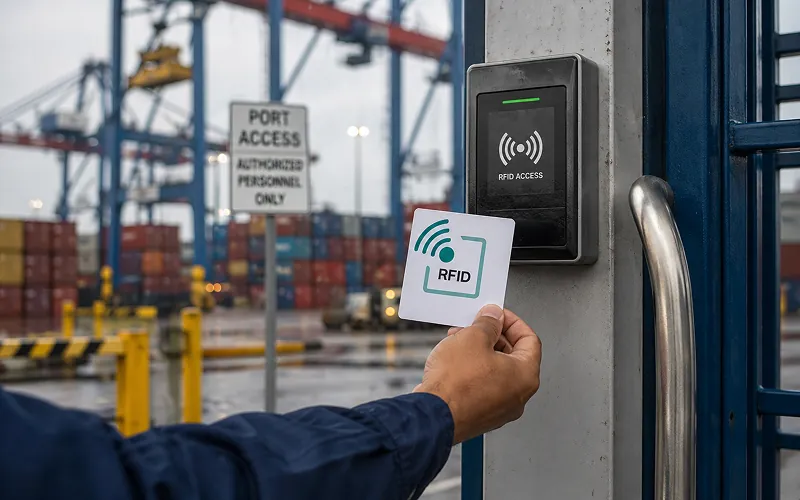
Identification at Entry Points
RFID tags are read automatically as authorised vehicles and personnel pass through port entry and exit gates without stopping or manual checks.
Movement Tracking Across Port Areas
As vehicles move through yards, terminals, and operational corridors, RFID captures movement events in the background, supporting RFID container and logistics tracking.
Data Consolidation into Port Systems
Captured RFID events are fed into TOS and gate automation platforms, creating a unified operational view across existing port systems.
Visibility at the Command Layer
Validated RFID movement data becomes available to command and control centres for monitoring, security audits, and incident response.
Where RFID Operates Inside a Port
RFID is deployed at locations where speed, security, and operational traceability must work together.
Port Entry & Exit Gates
Automated identification of authorised vehicles and personnel through RFID access control.
Yards & Terminals
Continuous visibility of authorised vehicle, container, and asset movement.
Restricted Zones
Controlled access to sensitive operational and security areas.
Operational Corridors
Movement traceability across large multi-terminal port environments.
Operational Outcomes for Port Authorities
Beyond improving gate speed, RFID strengthens how ports govern movement, coordinate teams, and take operational decisions while working seamlessly with access control systems, surveillance platforms, and gate automation systems.
-
Reduced gate congestion and faster vehicle turnaround
-
Verifiable movement records supporting ISPS audits and investigations
-
Stronger coordination between security, operations, and command teams
-
Trusted real-time movement data for command centres and incident response
Frequently Asked Questions
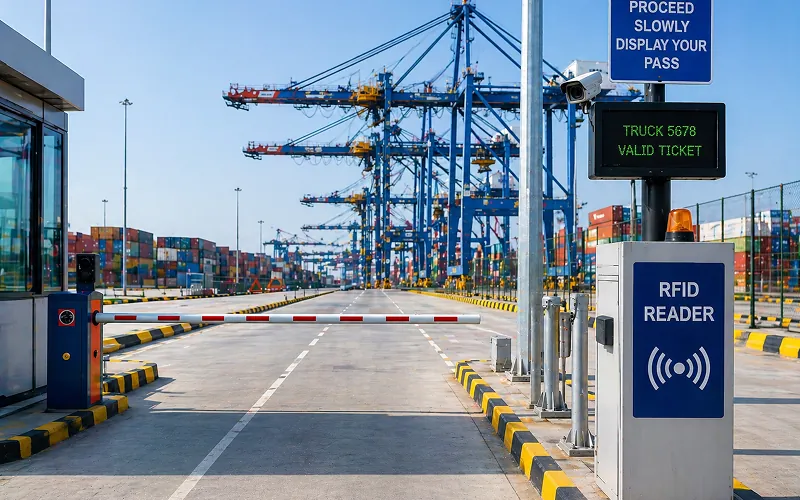
RFID capture occurs automatically as vehicles move through gates or operational corridors. Vehicles and assets are identified without stopping, manual scanning, or operator intervention. Operational throughput remains governed by gate and yard capacity rather than the RFID system.
RFID deployments in ports are engineered for metal-dense environments and harsh outdoor conditions. Reader placement, tag positioning, and calibration are designed to maintain consistent reads despite weather exposure, equipment movement, and high vehicle density.
RFID acts as a data capture layer that feeds movement information into systems such as gate automation, weighbridge automation, terminal operating systems (TOS), surveillance platforms, and command control centres. It enhances operational visibility without replacing existing systems.