
Perimeter Intrusion
Detection System (PIDS)
Automated monitoring of perimeter fencing and security boundaries for ISPS-compliant port security operations.
Learn MoreContinuous Monitoring
24/7 automated detection of fence disturbances and intrusion attempts
Instant Alerts
Real-time notifications to security teams when intrusion is detected
CCTV Integration
Automatic camera triggering for visual verification of intrusion events
Strengthened Perimeter Protection
When implemented as part of a comprehensive port security architecture, PIDS systems strengthen perimeter protection and security awareness.
Early Detection
Early detection of intrusion attempts along port boundary infrastructure
Reduced Manual Patrols
Reduced dependence on manual perimeter patrols
Faster Response
Faster response to security breaches and unauthorised access attempts
Audit Support
Recorded intrusion events supporting security audits and investigations
How the Perimeter Intrusion Detection System Operates
A PIDS system functions as a continuous perimeter monitoring layer that detects intrusion attempts along port boundary infrastructure.

Perimeter Sensor Deployment
Specialised perimeter detection sensors are installed along port boundary fencing, walls, and restricted zone perimeters to monitor potential intrusion attempts.
Intrusion Detection and Signal Trigger
When physical disturbance, climbing attempts, or fence vibrations occur, the perimeter intrusion detection system detects the event through sensors and generates an alert signal.
Event Validation and Alert Generation
Detected intrusion events are analysed and validated based on predefined security rules, triggering alerts for security personnel.
Integration with Security Monitoring Systems
Intrusion alerts are shared with CCTV surveillance systems, video management systems (VMS), and Integrated Command Control Centres (ICCC) to enable rapid verification and response.
Where PIDS Operates Inside a Port
Perimeter intrusion detection systems are deployed along port boundaries where continuous perimeter monitoring and intrusion detection are required.
Port Boundary Fencing
Monitoring external security perimeters to detect unauthorised entry attempts
Restricted Security Zones
Protecting sensitive operational areas within the port
Terminal and Yard Perimeters
Securing cargo storage areas and operational yards
High-Security Infrastructure Zones
Monitoring locations such as fuel storage, control rooms, and critical facilities
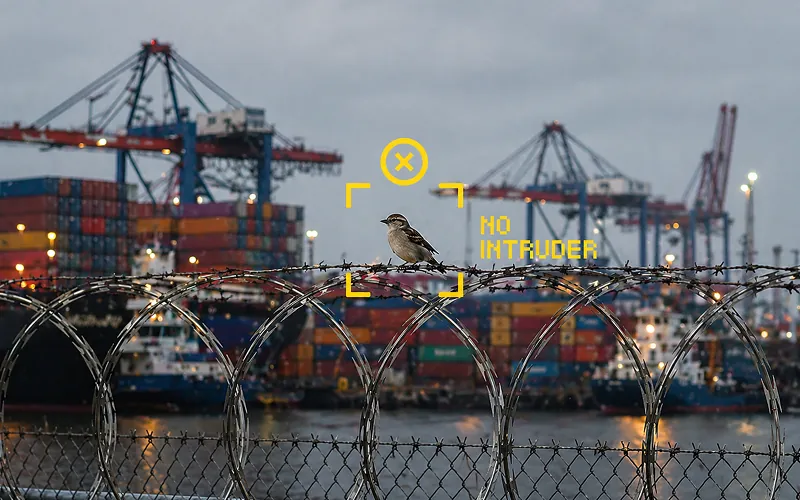
Perimeter Intrusion Detection System (PIDS) for Ports
Ports operate across large physical boundaries that include terminals, storage yards, logistics corridors, and restricted operational areas. Monitoring these extensive perimeters through manual patrolling alone makes it difficult to detect unauthorised access attempts in time.
Maritime Systems provides Perimeter Intrusion Detection Systems (PIDS) designed for port environments, enabling automated monitoring of perimeter fencing and security boundaries.
Continuous monitoring of fence lines and restricted boundaries
Detect intrusion attempts and alert security teams immediately
Strengthen ISPS-compliant port security operations
No interruption to normal port activities
Frequently Asked Questions
A perimeter intrusion detection system continuously monitors port boundaries and detects unauthorised access attempts such as fence climbing, cutting, or disturbance. It acts as an early-warning security layer for port perimeter protection.
CCTV systems provide visual monitoring, while PIDS detects physical intrusion attempts along boundary fencing. When integrated together, PIDS alerts can automatically trigger CCTV cameras for visual verification.
Yes. PIDS integrates with CCTV surveillance systems, Video Management Systems (VMS), access control systems, and Integrated Command Control Centres to provide coordinated security monitoring.
While the ISPS Code does not mandate a specific technology, many ports deploy perimeter intrusion detection systems to strengthen perimeter monitoring and demonstrate enhanced security controls during compliance audits.