
Gate Automation
Port Solutions
Rule-based and secure vehicle entry and exit through automated gate infrastructure integrated within ISPS-compliant port security frameworks.
Learn MorePhysical Control
Automated gate movement based on validation
Access Enforcement
Digital verification of vehicles and permits
Execution Layer
Converting identification into gate actions
Critical Control Points
Port gates are critical control points where vehicle movement, safety, and security enforcement must operate together. Manual gate handling often results in congestion, delays, and inconsistent enforcement of vehicle access policies.
Maritime Systems provides gate automation solutions designed for port environments, enabling rule-based and secure vehicle entry and exit through automated gate infrastructure.
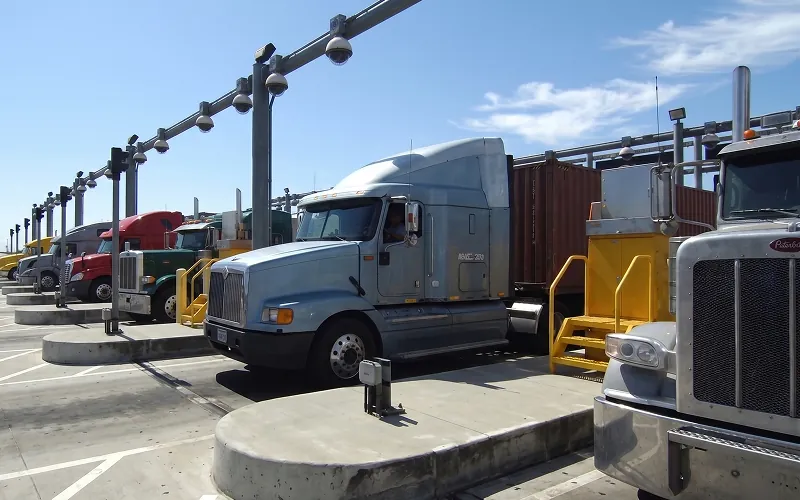
Data Sources Used by Gate Automation
Gate automation relies on multiple port security and identification systems to determine whether a vehicle should be allowed to enter or exit the port.
RFID Systems
Provide RFID vehicle identification and vehicle access control data used for automated gate decisions
ANPR Systems
Supply automatic number plate recognition data to validate vehicle identity and access rights
Access Control and Permit Systems
Validate authorised vehicles, personnel, and port entry permits before the gate barrier is activated
UVSS and Security Systems
Provide vehicle inspection and security clearance status before allowing gate movement
How Gate Automation Operates Within Live Port Gate Workflows
Gate automation functions within existing port gate operations to enforce access decisions automatically without manual gate handling.
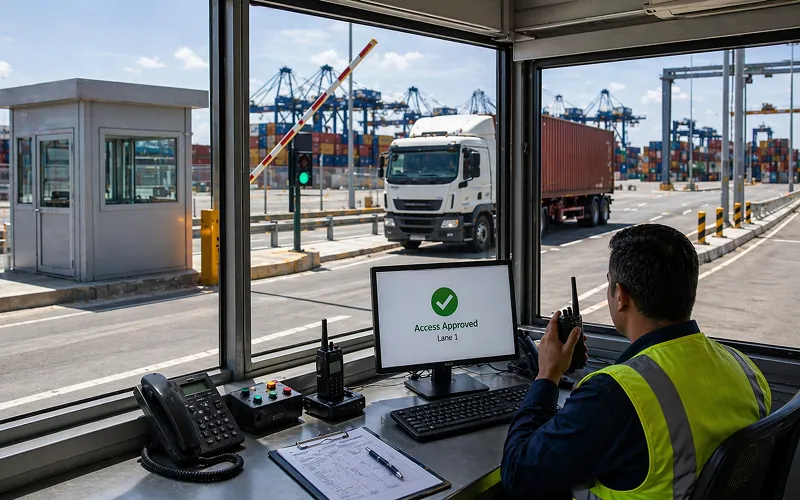
Vehicle Arrival and Access Trigger
Vehicles approach entry or exit gates where access requests are triggered through integrated RFID readers, ANPR cameras, or permit validation systems.
Access Validation
Vehicle authorisation is validated against port entry permits, RFID vehicle access rules, and security policies defined within port access systems.
Automated Gate Execution
Based on the validation result, automatic boom barriers, bollards, or gate control mechanisms are activated to allow or deny vehicle passage.
Event Logging and Monitoring
Gate actions, exceptions, and vehicle movements are recorded and shared with access control systems, CCTV/VMS platforms, and command control centres for monitoring and audits.
Operational Outcomes for Port Authorities
When implemented as part of an integrated port access management framework, gate automation delivers clear operational and governance benefits.
Enforced Access
Enforced vehicle access without manual gate handling
Faster Processing
Faster vehicle processing and reduced gate congestion
Improved Safety
Improved safety at port entry and exit points
Traceable Events
Traceable gate events supporting ISPS security audits
Operational Sync
Better coordination between port security and operations teams
Smart Port Architecture
As part of a smart port architecture, gate automation acts as the execution layer, converting vehicle identification and access validation into secure and auditable gate operations.
Execution Layer Role
Gate automation integrates automatic boom barriers, bollards, RFID vehicle entry systems, and ANPR vehicle identification, ensuring that access decisions are executed consistently within ISPS-compliant port security frameworks.
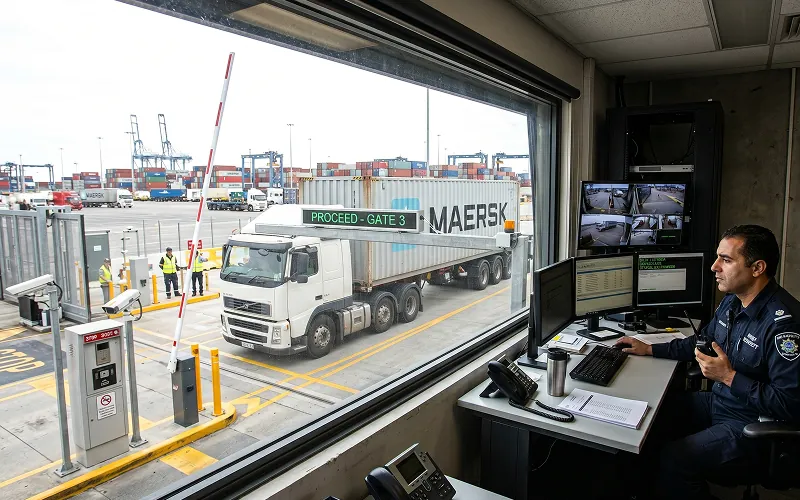
Frequently Asked Questions
RFID and ANPR systems identify or validate vehicles, while gate automation physically controls gate movement.
In simple terms: RFID / ANPR → Identify the vehicle. Gate Automation → Opens or keeps the gate closed.
Gate automation systems support fallback and exception workflows, including manual overrides and predefined security rules, ensuring operations continue without compromising safety or access control.
If a vehicle fails identification or validation checks, the automatic boom barrier remains closed and the event is logged. Security teams are notified through monitoring systems or command centres for further action.
Yes. Gate automation integrates with RFID vehicle access control systems, ANPR systems, port entry permit systems, CCTV surveillance systems, and Integrated Command Control Centres (ICCC) without replacing existing infrastructure.